
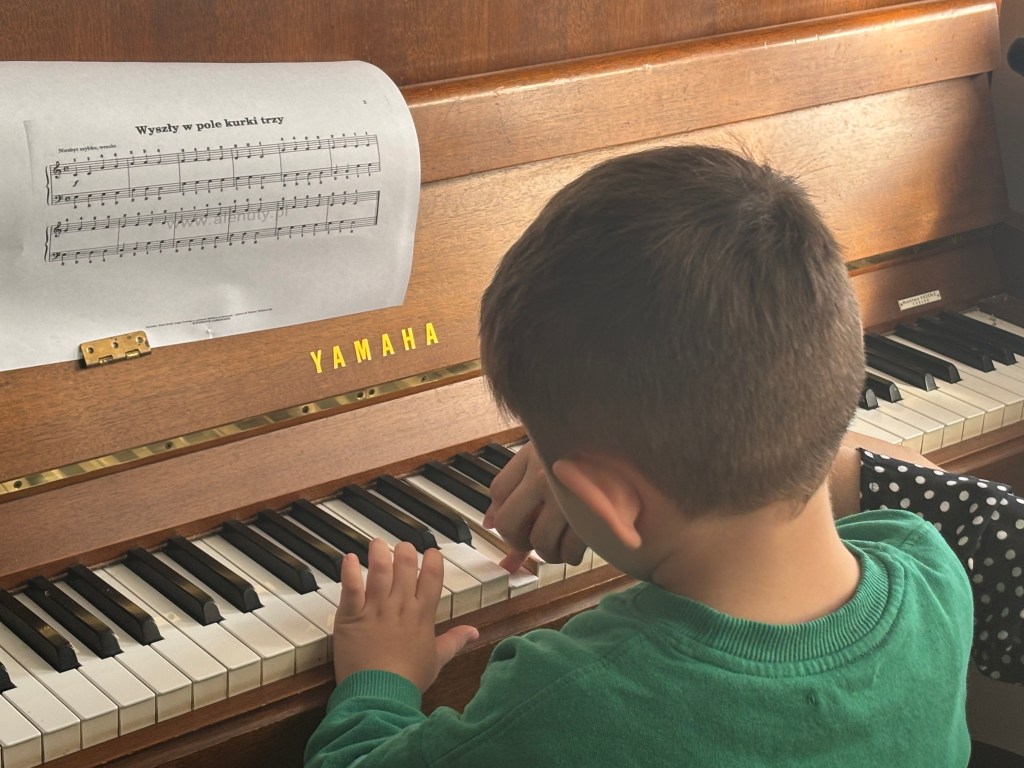
This lesson with Tymek was a little different than the previous ones. From the very beginning, he was full of energy — lively, spontaneous, and easily distracted. Yet once we sat down at the piano, something shifted. His focus began to align with the sound and the pulse.
I had prepared a simple piece — “Twinkle, Twinkle, Little Star” (originally the French folk song “Ah! vous dirai-je, Maman”, later famously arranged by Mozart) — one of the very first melodies children around the world learn at the piano. Tymek didn’t read the notes; instead, he imitated what I played and heard, and did it surprisingly well once he managed to concentrate.
But what fascinated him most was the metronome.
He listened to its ticking with great curiosity, changing the tempo — faster, slower, faster again — and following it with impressive accuracy. At some point, the lesson turned into a rhythmic game: following the beat, clapping, reacting to tempo changes. I felt that rhythm itself helped Tymek organize his movement and attention — as if the regular pulse provided something stable to hold onto.
What Science Says
Scientific studies support the idea that rhythm can help regulate movement, focus, and emotion.
As Michael H. Thaut and Mutsumi Abiru observed:
“One of the core elements of any musical ‘language structure,’ rhythm has always been one of the primary foci of these research efforts.”
(Thaut, M. H. & Abiru, M. (2010). Rhythmic Auditory Stimulation in Rehabilitation of Movement Disorders: A Review of Current Research. Music Perception, 27(4), 263–269. DOI: 10.1525/mp.2010.27.4.263)
Their research shows that rhythmic auditory stimulation can synchronize brain and body through entrainment — the natural alignment of neural and motor timing to external rhythm.
Similarly, Anne Blythe LaGasse found that:
“Research indicates that music therapy can improve social behaviors and joint attention in children with Autism Spectrum Disorder (ASD).”
(LaGasse, A. B. (2014). Effects of a Music Therapy Group Intervention on Enhancing Social Skills in Children with Autism. Journal of Music Therapy, 51(3), 250–275. DOI: 10.1093/jmt/thu012)
This finding beautifully reflects what I saw in Tymek: the metronome became his framework — something predictable that helped him connect rhythm, attention, and emotion.
A Moment of Connection
Near the end of the lesson, something unexpected happened.
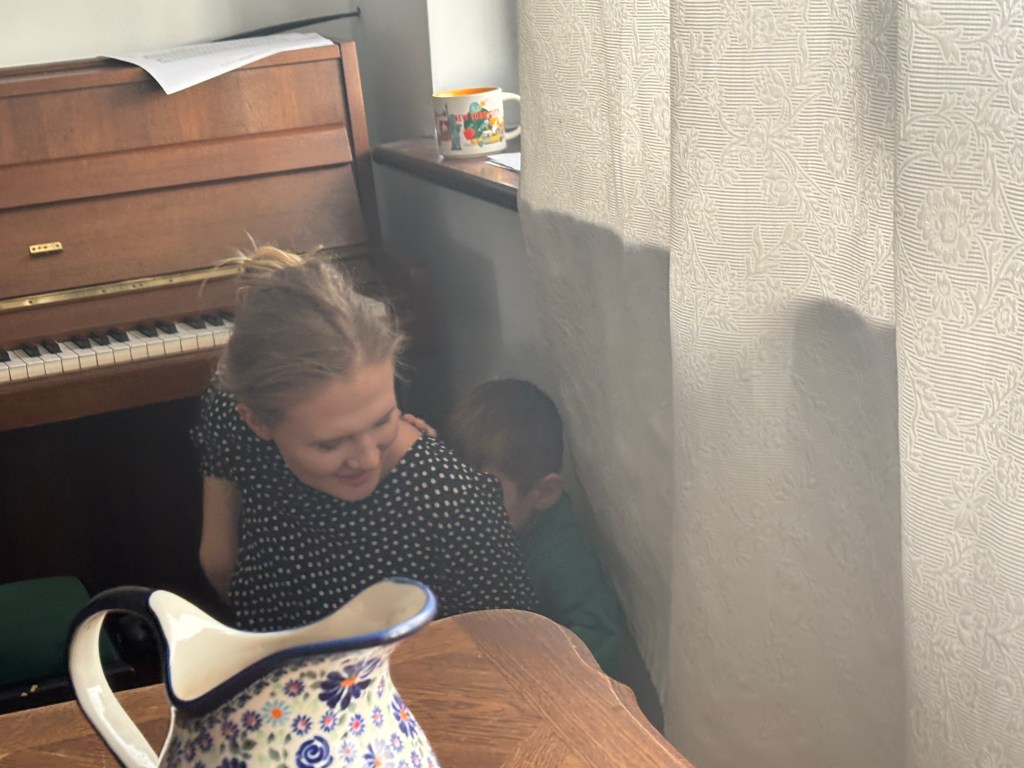
Tymek’s mother jokingly said she would “tickle him”, and he immediately ran and hid behind me, as if seeking protection.
It was just a second, but it spoke volumes — a sign of trust and emotional safety.
Perhaps it was the rhythm, the shared focus, or simply the calm of making music together that created a space where he felt secure — a safe rhythm, both musical and emotional.
What I Learned
This lesson reminded me that sometimes the greatest progress doesn’t happen with notes, but with rhythm.
For children who need more predictability and structure, rhythm can become a bridge — between emotion and sound, movement and focus.
And sometimes, that bridge quietly leads to the most important part of all — trust.
A Musical Curiosity
The piece Tymek played — “Twinkle, Twinkle, Little Star” — has a surprisingly long history.
Its melody comes from the 18th-century French folk song “Ah! vous dirai-je, Maman” (“Shall I tell you, Mother”), which later became the theme of Wolfgang Amadeus Mozart’s “Twelve Variations on ‘Ah! vous dirai-je, Maman’, K. 265”.
Today, the same tune is used not only for Twinkle, Twinkle, Little Star, but also for Baa Baa Black Sheep and The Alphabet Song.
In Polish, this melody appears as “Wyszły w pole kurki trzy” — the version Tymek learned to play.
It’s fascinating that a single melody — simple and repetitive — connects children learning music all over the world.
Scientific references:
- Thaut, M. H. & Abiru, M. (2010). Rhythmic Auditory Stimulation in Rehabilitation of Movement Disorders: A Review of Current Research. Music Perception, 27(4), 263–269. DOI: 10.1525/mp.2010.27.4.263
- LaGasse, A. B. (2014). Effects of a Music Therapy Group Intervention on Enhancing Social Skills in Children with Autism. Journal of Music Therapy, 51(3), 250–275. DOI: 10.1093/jmt/thu012
Metronom, rytm i zaufanie – lekcja z Tymkiem
Ta lekcja z Tymkiem była trochę inna niż poprzednie. Od samego początku był pełen energii – żywy, spontaniczny, łatwo się rozpraszał. A jednak, kiedy usiedliśmy przy fortepianie, coś się zmieniło. Jego uwaga zaczęła się porządkować wokół dźwięku i rytmu.
Przygotowałam dla niego prosty utwór – „Wyszły w pole kurki trzy”, który jest polską wersją melodii znanej na świecie jako „Twinkle, Twinkle, Little Star”, pochodzącej z francuskiej piosenki ludowej „Ah! vous dirai-je, Maman”, opracowanej przez Mozarta.
To jedna z pierwszych melodii, od których dzieci na całym świecie zaczynają naukę gry na pianinie.
Tymek nie czytał jeszcze nut; raczej powtarzał to, co widział i słyszał u mnie, i robił to zaskakująco dobrze, gdy tylko potrafił się skupić.
Jednak największą fascynację wzbudził metronom.
Tymek słuchał jego tykania z ogromnym zaciekawieniem, zmieniał tempo – szybciej, wolniej, znów szybciej – i robił to z dużym wyczuciem.
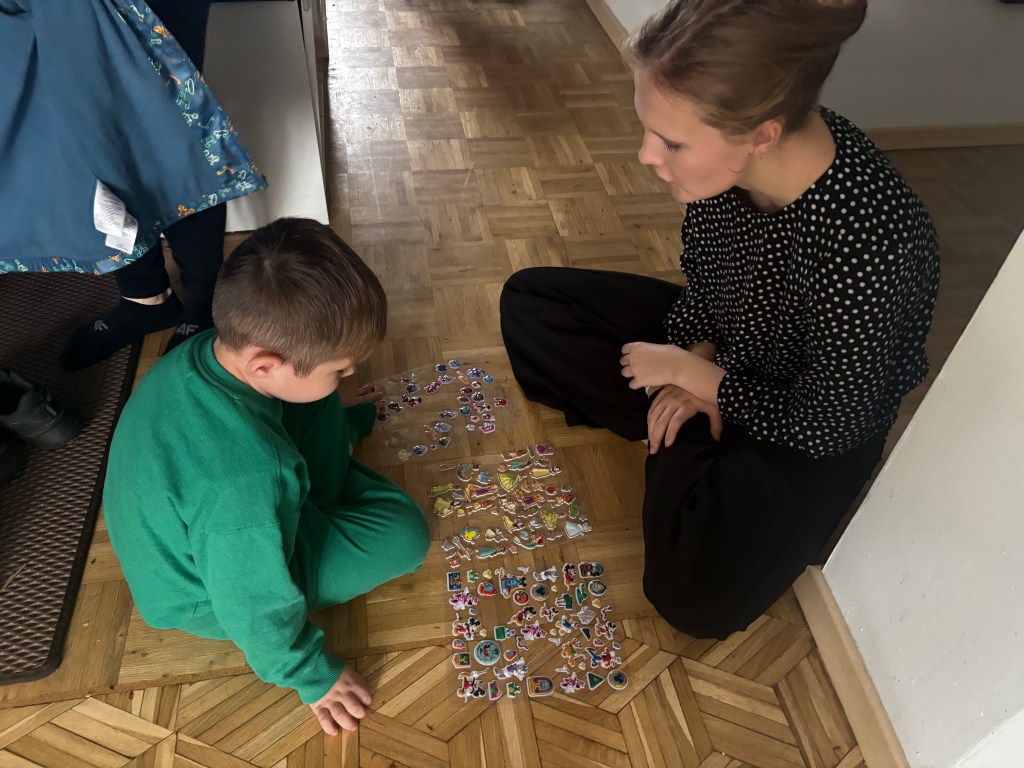
W pewnym momencie lekcja zmieniła się w zabawę rytmem: wspólne śledzenie pulsu, klaskanie, reagowanie na tempo.
Czułam, że rytm pomagał mu uporządkować ruchy i skupić uwagę – jakby regularne tykanie dawało mu coś stałego, na czym może się oprzeć.
Co mówią badania
Badania naukowe wskazują, że rytm może wspierać koncentrację, emocje i funkcje motoryczne.
Jak zauważyli Michael H. Thaut i Mutsumi Abiru:
„Rytm, jako jeden z podstawowych elementów każdej ‘muzycznej struktury językowej’, od zawsze stanowił jeden z głównych obszarów badań w tej dziedzinie.” (tłum. własne)
(Thaut, M. H. & Abiru, M. 2010. Rhythmic Auditory Stimulation in Rehabilitation of Movement Disorders: A Review of Current Research. Music Perception, 27(4), 263–269. DOI: 10.1525/mp.2010.27.4.263)
Ich badania pokazują, że rytmiczna stymulacja słuchowa może synchronizować pracę mózgu i ciała poprzez zjawisko entrainment – naturalne dostrajanie rytmu neuronalnego i motorycznego do zewnętrznego pulsu.
Podobne efekty zaobserwowała Anne Blythe LaGasse:
„Badania wskazują, że muzykoterapia może poprawiać zachowania społeczne i wspólną uwagę u dzieci ze spektrum autyzmu (ASD).” (tłum. własne)
(LaGasse, A. B. 2014. Effects of a Music Therapy Group Intervention on Enhancing Social Skills in Children with Autism. Journal of Music Therapy, 51(3), 250–275. DOI: 10.1093/jmt/thu012)
To dokładnie to, co widziałam u Tymka – metronom stał się jego ramą, czymś przewidywalnym, co pomagało mu połączyć rytm, emocje i uwagę.
Moment bliskości
Pod koniec lekcji wydarzyło się coś niespodziewanego.
Mama Tymka zażartowała, że go „wyłaskocze”, a on natychmiast podbiegł i schował się za mną, jakby szukając ochrony.
To był krótki moment, ale bardzo wymowny – sygnał zaufania i poczucia bezpieczeństwa.
Być może to rytm, wspólna koncentracja albo po prostu spokój muzyki sprawiły, że poczuł się bezpiecznie – w swoim bezpiecznym rytmie, muzycznym i emocjonalnym.
Czego mnie to nauczyło
Ta lekcja przypomniała mi, że czasem największy postęp nie dzieje się przy nutach, lecz przy rytmie.
Dla dzieci, które potrzebują struktury i przewidywalności, rytm może stać się mostem między emocjami a dźwiękiem.
A czasem ten most prowadzi do czegoś jeszcze ważniejszego – zaufania.
Ciekawostka muzyczna
Utwór, który grał Tymek – „Wyszły w pole kurki trzy” – ma niezwykle długą i ciekawą historię.
Jego melodia pochodzi z XVIII-wiecznej francuskiej piosenki ludowej „Ah! vous dirai-je, Maman” („Ach, powiem ci, mamo”), którą w 1781 roku opracował Wolfgang Amadeus Mozart w cyklu „Dwanaście wariacji na temat ‘Ah! vous dirai-je, Maman’, KV 265”.
Dziś ten sam motyw melodyczny można usłyszeć w piosenkach Twinkle, Twinkle, Little Star, Baa Baa Black Sheep i The Alphabet Song.
To piękny przykład na to, jak jedna prosta melodia łączy dzieci uczące się muzyki na całym świecie — od Wiednia, przez Paryż, aż po Wrocław.
📚 Źródła naukowe:
- Thaut, M. H. & Abiru, M. (2010). Rhythmic Auditory Stimulation in Rehabilitation of Movement Disorders: A Review of Current Research. Music Perception, 27(4), 263–269. DOI: 10.1525/mp.2010.27.4.263
- LaGasse, A. B. (2014). Effects of a Music Therapy Group Intervention on Enhancing Social Skills in Children with Autism. Journal of Music Therapy, 51(3), 250–275. DOI: 10.1093/jmt/thu012
 Exploring how voice connects music, science, and emotion.