
An introduction to the neurobiology of music
When we listen to our favorite melody, we often say that it “moves us.” But science shows that music doesn’t just move us emotionally — it literally changes our brain.
Research published in Nature Mental Health (2024) reveals that music activates the same brain regions that respond to food, love, and reward — particularly the dopaminergic system, our biological “pleasure circuit.” When we listen to music we enjoy, the brain releases dopamine, the same neurotransmitter linked to joy, satisfaction, and affection.
According to the WHO (2019) report, regular engagement with music can improve mental well-being, reduce stress, and even support recovery processes. This isn’t magic — it’s neurobiology. Rhythm, melody, and harmony can influence brainwave patterns, regulate breathing and heart rate, and even synchronize the activity of both hemispheres.
For those who make music actively, the brain literally rewires itself. Tang et al. (2020) found that musicians have larger and better-connected areas in regions such as the auditory cortex, corpus callosum, and cerebellum. This is an example of neuroplasticity — the brain’s ability to adapt and reshape itself through experience.
So, can music really heal?
That’s the question we’ll explore in the next posts — how music supports therapy for depression, stroke rehabilitation, and child development.
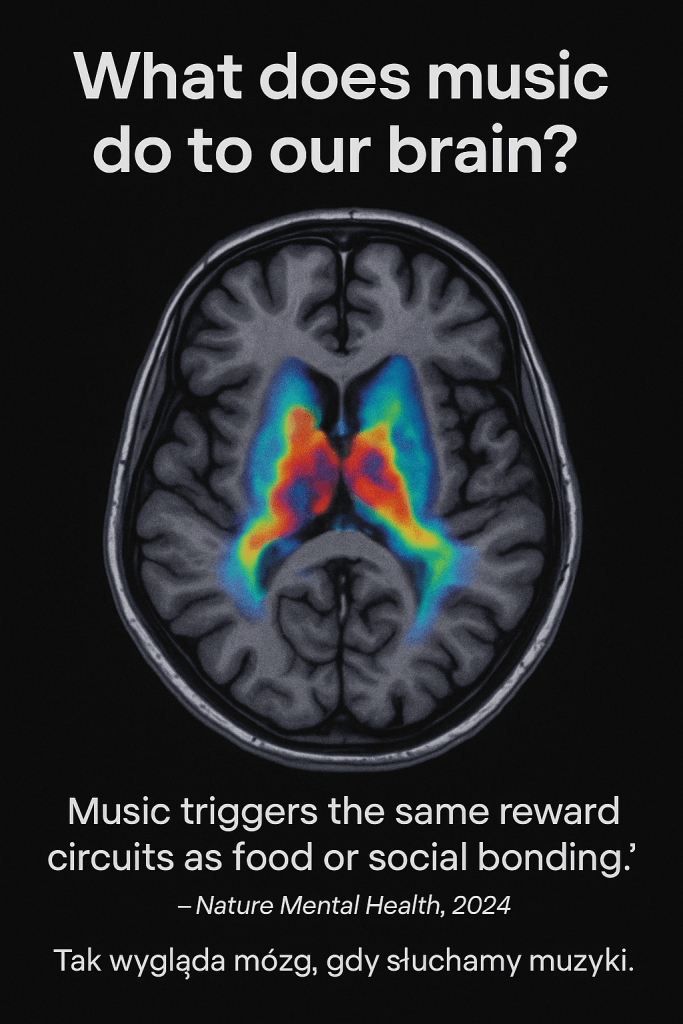
“This is what your brain looks like when you listen to music.”
Scientific sources:
- World Health Organization (2019). What is the evidence on the role of the arts in improving health and well-being?
- Nature Mental Health (2024). Music triggers the same reward circuits as food or social bonding.
- Tang et al. (2020). The neuroscience of musical training: evidence for structural and functional brain changes.
🇵🇱 Wersja polska
Co muzyka robi z naszym mózgiem?
Wprowadzenie do neurobiologii muzyki
Kiedy słuchamy ulubionej melodii, często mówimy, że „porusza nas”. Ale nauka pokazuje, że muzyka nie tylko porusza emocje – ona dosłownie zmienia nasz mózg.
Badania opublikowane w Nature Mental Health (2024) potwierdzają, że muzyka aktywuje te same obszary mózgu, które reagują na jedzenie, miłość i nagrody – zwłaszcza układ dopaminowy, czyli nasz biologiczny „system przyjemności”. Kiedy więc słuchamy muzyki, która nam się podoba, mózg uwalnia dopaminę – neuroprzekaźnik związany z radością, satysfakcją i uczuciem bliskości.
Według raportu WHO z 2019 roku, regularny kontakt z muzyką może poprawiać samopoczucie, redukować stres i wspierać procesy zdrowienia. To nie magia, lecz neurobiologia: rytm, melodia i harmonia wpływają na fale mózgowe, regulują oddech i tętno, a nawet synchronizują pracę obu półkul mózgowych.
U osób, które aktywnie tworzą muzykę, mózg dosłownie się przebudowuje. Tang i wsp. (2020) wykazali, że u muzyków pewne struktury – kora słuchowa, ciało modzelowate, móżdżek – są większe i lepiej połączone. To zjawisko neuroplastyczności, czyli zdolności mózgu do zmiany swojej struktury pod wpływem doświadczeń.
Czy więc muzyka może naprawdę leczyć?
Na to pytanie odpowiemy w kolejnych postach – o tym, jak muzyka wspiera terapię depresji, rehabilitację po udarze i rozwój dzieci.
Inspiracje naukowe:
- World Health Organization (2019). What is the evidence on the role of the arts in improving health and well-being?
- Nature Mental Health (2024). Music triggers the same reward circuits as food or social bonding.
- Tang et al. (2020). The neuroscience of musical training: evidence for structural and functional brain changes.
 Exploring how voice connects music, science, and emotion.